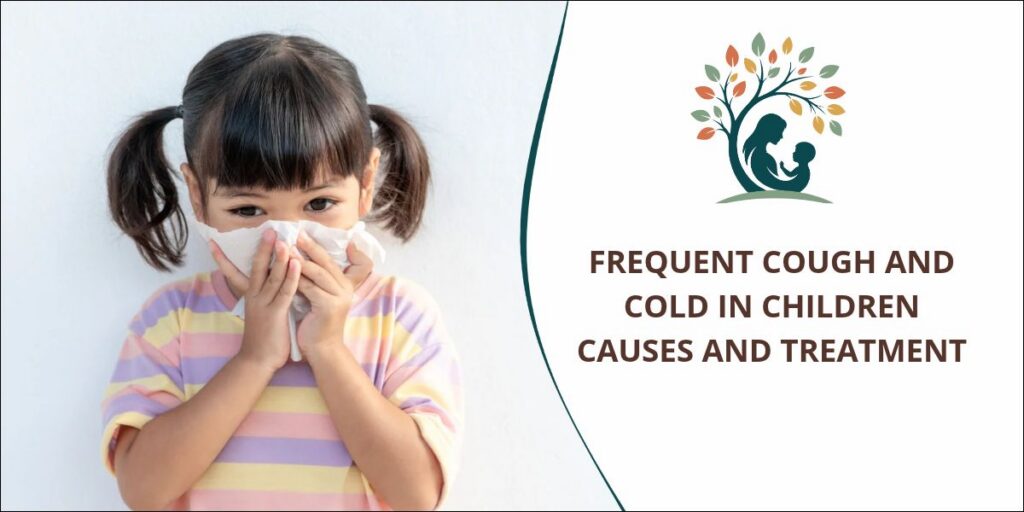
Frequent cough and cold in children is usually caused by repeated viral infections, which are very common in toddlers and school-age children as their immune systems mature and they are exposed to many germs at daycare and school. Other factors include allergies, asthma, enlarged adenoids, passive smoking and air pollution. Most colds settle on their own within 7 to 10 days with rest, fluids and simple home care. A paediatrician should check a child whose cough lasts more than three to four weeks, who has breathing difficulty, wheezing, high fever or poor feeding.
This article explains what is normal, common causes of repeated coughs and colds, home care, treatment and warning signs.
Is It Normal for Children to Get Frequent Colds?
Yes, to a point. Young children can catch a cold every few weeks, especially in the first one or two years of daycare or school. Each new virus helps the immune system build protection. As children grow, the number of colds usually reduces. What matters is whether the child recovers well between illnesses, eats, plays and grows normally.
Common Causes of Frequent Cough and Cold
Viral infections
More than a hundred different viruses can cause the common cold. Being in close contact with other children, sharing toys and touching the face spread them easily.
Allergies
Allergic rhinitis can cause sneezing, a runny or blocked nose and cough that may look like repeated colds. Dust mites, pollen, pet dander and mould are common triggers.
Asthma
A cough that is worse at night, after play or with cold air, especially with wheezing or breathlessness, may point to asthma.
Enlarged adenoids and tonsils
These can lead to mouth breathing, snoring, a blocked nose and frequent infections.
Environmental factors
- Exposure to cigarette smoke at home
- Indoor smoke from incense, mosquito coils or cooking fuel
- Outdoor air pollution and dust
- Seasonal changes, particularly monsoon and winter
Other contributing factors
Inadequate sleep, poor nutrition, iron deficiency, missed vaccinations and, rarely, underlying immune or lung problems can make a child more prone to infections.
Symptoms of a Common Cold in Children
- Runny or blocked nose
- Sneezing
- Cough, often worse at night
- Sore throat
- Mild fever
- Irritability, reduced appetite and tiredness
Home Care for Cough and Cold
- Fluids: offer plenty of fluids; continue breastfeeding for babies
- Rest: allow extra sleep and quiet play
- Saline drops: saline nasal drops can help loosen a blocked nose, especially before feeds in infants
- Steam and humidity: a steamy bathroom may ease congestion; avoid direct hot water steam because of burn risk
- Honey: for children over one year, a small amount of honey may soothe a cough. Never give honey to babies under one year
- Fever care: use a fever medicine only in the dose advised by your doctor. Read our guide on fever in babies and toddlers
Avoid giving cough syrups, decongestants or antibiotics without a doctor’s advice.
Warning Signs: When to See a Doctor
- Fast, noisy or difficult breathing, or the chest pulling in with each breath
- Wheezing
- Bluish lips or face (needs emergency care)
- Fever above 100.4°F (38°C) in a baby under 3 months
- High fever, or fever lasting more than two to three days
- Ear pain or discharge from the ear
- Poor feeding, fewer wet nappies or signs of dehydration
- Unusual drowsiness or irritability
- A cough lasting more than three to four weeks
How a Paediatrician Evaluates Frequent Coughs and Colds
The doctor will ask about the pattern of illnesses, triggers, family history of allergy or asthma, sleep, growth and home environment. A physical examination checks the ears, throat, nose and chest. Depending on findings, tests such as blood counts, allergy evaluation or a chest X-ray may occasionally be advised. Learn more about the management of acute and chronic illnesses in children.
Treatment Depends on the Cause
- Viral colds: supportive care at home
- Bacterial infections: such as some ear or chest infections, treated with antibiotics when prescribed
- Allergies: reducing exposure to triggers and medicines advised by the doctor
- Asthma: an action plan, often with inhalers used with a spacer
- Enlarged adenoids: medical treatment and, in some cases, referral to an ENT specialist
Prevention Tips
- Teach regular handwashing with soap
- Encourage covering the mouth when coughing or sneezing
- Keep vaccinations up to date, including the yearly flu vaccine if advised. See our child vaccination services
- Avoid smoking at home and in the car
- Offer a balanced diet with fruits, vegetables and protein
- Ensure adequate sleep and outdoor play
- Keep sick children at home to rest and avoid spreading infection
Frequently Asked Questions
How many colds a year is normal for a child?
Young children commonly get several colds a year, often six to eight or more, especially in their first years at daycare or school. Each cold usually lasts 7 to 10 days, and a cough can linger for two to three weeks.
Why does my child catch a cold so often?
Young children are still building immunity and are exposed to many viruses at daycare, school and play. Close contact, shared toys, seasonal changes, pollution, passive smoking and allergies can add to the frequency.
Should I give my child antibiotics for a cold?
Colds are caused by viruses, and antibiotics do not work against them. Antibiotics are used only when a doctor finds a bacterial infection. Unnecessary antibiotics can cause side effects and resistance.
Are cough syrups safe for young children?
Over-the-counter cough and cold medicines are generally not recommended for young children, and some are unsafe for those under certain ages. Please consult your paediatrician before giving any medicine.
When should I worry about my child’s cough?
See a doctor if the cough lasts more than three to four weeks, comes with fast or difficult breathing, wheezing, high or persistent fever, poor feeding, ear pain, or if your child seems very unwell.
Can frequent colds be a sign of allergy or asthma?
Sometimes. A cough that keeps returning at night, with exercise or with a wheeze, or a constantly runny or blocked nose with sneezing, may suggest asthma or allergic rhinitis rather than repeated infections. A paediatrician can assess this.
Consult Dr. Kritika Tiwari in Goregaon
If your child seems to be unwell often, or a cough is not settling, a check-up can help find the cause and plan care. Dr. Kritika Tiwari (MBBS, DNB Pediatrics, Diploma in Adolescent Health, University of Melbourne) is a paediatrician and adolescent health specialist in Goregaon, Mumbai. Read more about Dr. Kritika Tiwari.
You can also send a message through the contact page.