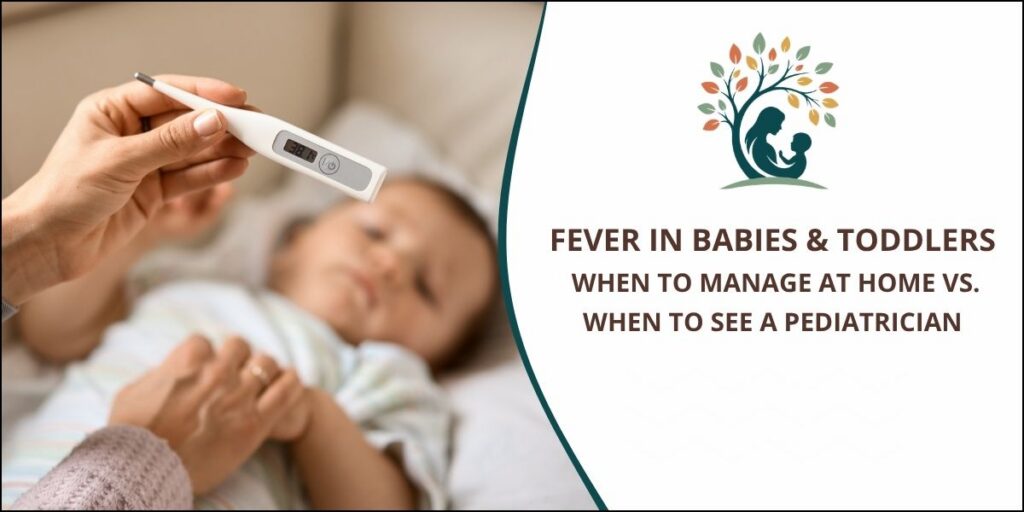
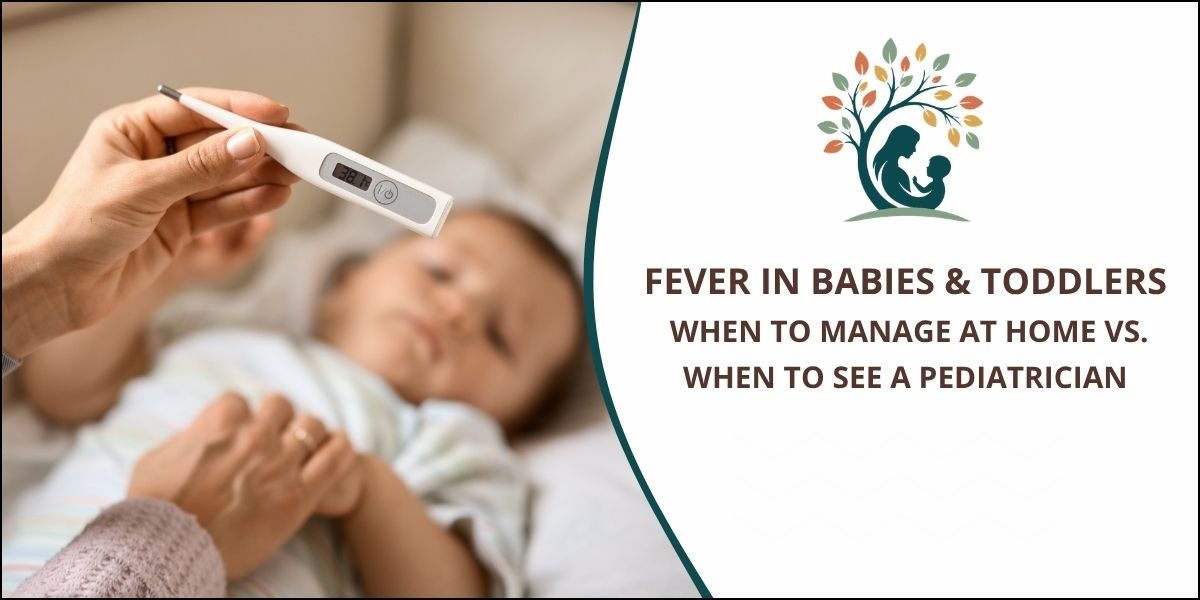
Fever in babies and toddlers can be worrying for parents. A warm forehead, unusual fussiness, or a higher temperature can immediately raise questions: Is it safe to manage the fever at home? Does my child need medicine? Or should I see a pediatrician?
Fever is usually a sign that the body is fighting an infection. Many childhood fevers are caused by common viral infections and improve with proper fluids, rest, and observation. However, the child’s age, temperature, symptoms, and overall behavior are important when deciding whether medical attention is needed.
What Temperature Is Considered a Fever in Babies and Toddlers?
A body temperature of 100.4°F (38°C) or higher is generally considered a fever. Using a reliable digital thermometer is better than judging fever by touching the forehead.
The temperature itself is only one part of the picture. A child who has a mild fever but is active, drinking fluids, and responding normally may need less urgent attention than a child with a similar temperature who is unusually sleepy, breathing rapidly, or refusing fluids.
When Can Fever Be Managed at Home?
For an otherwise healthy older baby or toddler who is comfortable and has no concerning symptoms, fever can often be monitored at home.
Parents can:
- Encourage frequent fluids, breast milk, or formula to prevent dehydration.
- Allow the child to rest and sleep comfortably.
- Dress the child in light, comfortable clothing.
- Keep the room comfortably cool rather than bundling the child in blankets.
- Monitor the temperature periodically.
- Observe the child’s behavior, breathing, eating, drinking, and urine output.
Fever medicine may sometimes be recommended to make a child more comfortable. Paracetamol (acetaminophen) is commonly used in children, but the correct dose depends on the child’s age and weight. Always follow your pediatrician’s advice or the product’s dosing instructions. Do not give aspirin to children unless specifically directed by a healthcare professional.
Avoid cold baths, ice packs, or alcohol rubs to bring down a child’s temperature. These methods can make the child uncomfortable and may not treat the underlying cause of the fever.
When Should You See a Pediatrician?
Some fevers require professional evaluation, especially in very young babies.
Babies younger than 3 months: A temperature of 100.4°F (38°C) or higher requires prompt medical evaluation, even if the baby otherwise appears well.
For older babies and toddlers, contact a pediatrician if:
- Fever continues or keeps returning.
- Your child is not drinking enough fluids.
- There are signs of dehydration, such as fewer wet diapers, dry mouth, or no tears while crying.
- The child is unusually sleepy, irritable, weak, or difficult to wake.
- There is persistent vomiting or diarrhea.
- Your child develops a rash along with fever.
- There is ear pain, persistent cough, difficulty breathing, or another symptom that is getting worse.
- You are concerned about your child’s overall condition.
A pediatrician can examine the child and determine whether the fever is likely due to a common infection or whether further testing or treatment is needed.
Fever Signs That Need Urgent Medical Attention
Some symptoms should not be ignored. Seek urgent medical care if your child has difficulty breathing, blue or grey lips, severe weakness, a seizure, a stiff neck, unusual confusion, difficulty waking, severe dehydration, or a rapidly spreading or concerning rash.
Trust your instincts as a parent. If your child looks significantly different from normal or you feel something is not right, it is reasonable to seek medical advice.
How Can Parents Monitor Fever Safely?
Keeping a simple record can help. Note the child’s temperature, when the fever started, fluids taken, wet diapers or urination, and any other symptoms.
Most importantly, look at the whole child rather than focusing only on the thermometer reading. A child’s activity level, hydration, breathing, and responsiveness can provide valuable information about how sick they may be.
It is also important not to start antibiotics without medical advice. Many childhood infections are viral, and antibiotics do not work against viruses. A pediatrician can decide whether antibiotics or another treatment is appropriate after examining your child.
Fever in Babies and Toddlers: The Bottom Line
Fever is common during childhood and does not always mean that something serious is happening. For many older babies and toddlers, mild fever can be monitored at home while keeping them hydrated and comfortable. However, fever in babies under 3 months, persistent fever, dehydration, breathing problems, unusual sleepiness, seizures, or other concerning symptoms require medical attention.
When in doubt, speaking with a pediatrician can give you clarity and help ensure your child receives the right care at the right time.
Pediatric Care in Goregaon
For parents looking for a Pediatrician in Goregaon, Dr. Kritika Tiwari provides child-focused medical care with attention to the individual needs of every young patient. From common childhood illnesses such as fever and infections to routine pediatric consultations and preventive care, parents can seek professional guidance when they are unsure about their child’s symptoms.
FAQs
1. What temperature is considered a fever in babies?
A temperature of 100.4°F (38°C) or higher is generally considered a fever.
2. When should I worry about fever in a baby?
A fever of 100.4°F (38°C) or higher in a baby under 3 months needs prompt medical evaluation.
3. Can I manage my toddler’s fever at home?
Mild fever can often be monitored at home if the toddler is drinking fluids, responsive, and otherwise comfortable.
4. Should I give medicine for every fever?
Not necessarily. Fever medicine is generally used to improve comfort, with the dose based on the child’s age and weight.
5. When should I take my child to a doctor for fever?
Seek medical advice for persistent fever, dehydration, breathing difficulty, unusual sleepiness, seizures, concerning rash, or other worrying symptoms.